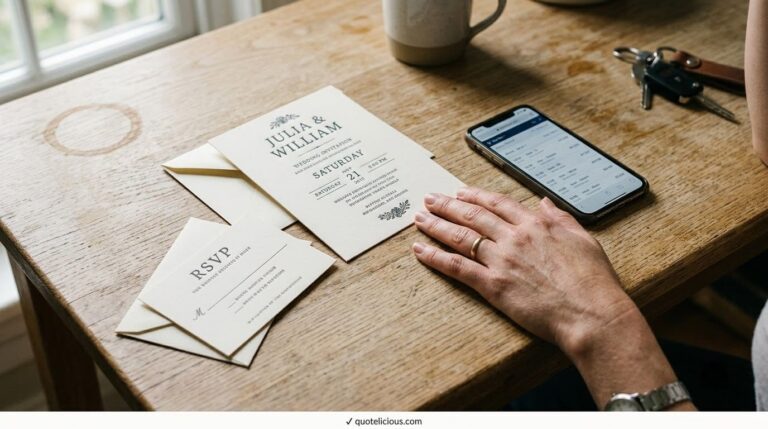
What to Say When You Can’t Afford to Split the Bill Evenly
Exact wording for asking to split a restaurant bill by what you actually ordered. Scripts for before the meal, at the table, and the awkward text afterward.
Never miss an update — choose Quotelicious as your preferred source on Google.
How it works: Tap the button below to open Google’s settings page, then check the box next to Quotelicious.
Tap the checkbox to turn it blue — that’s how you know it’s set.
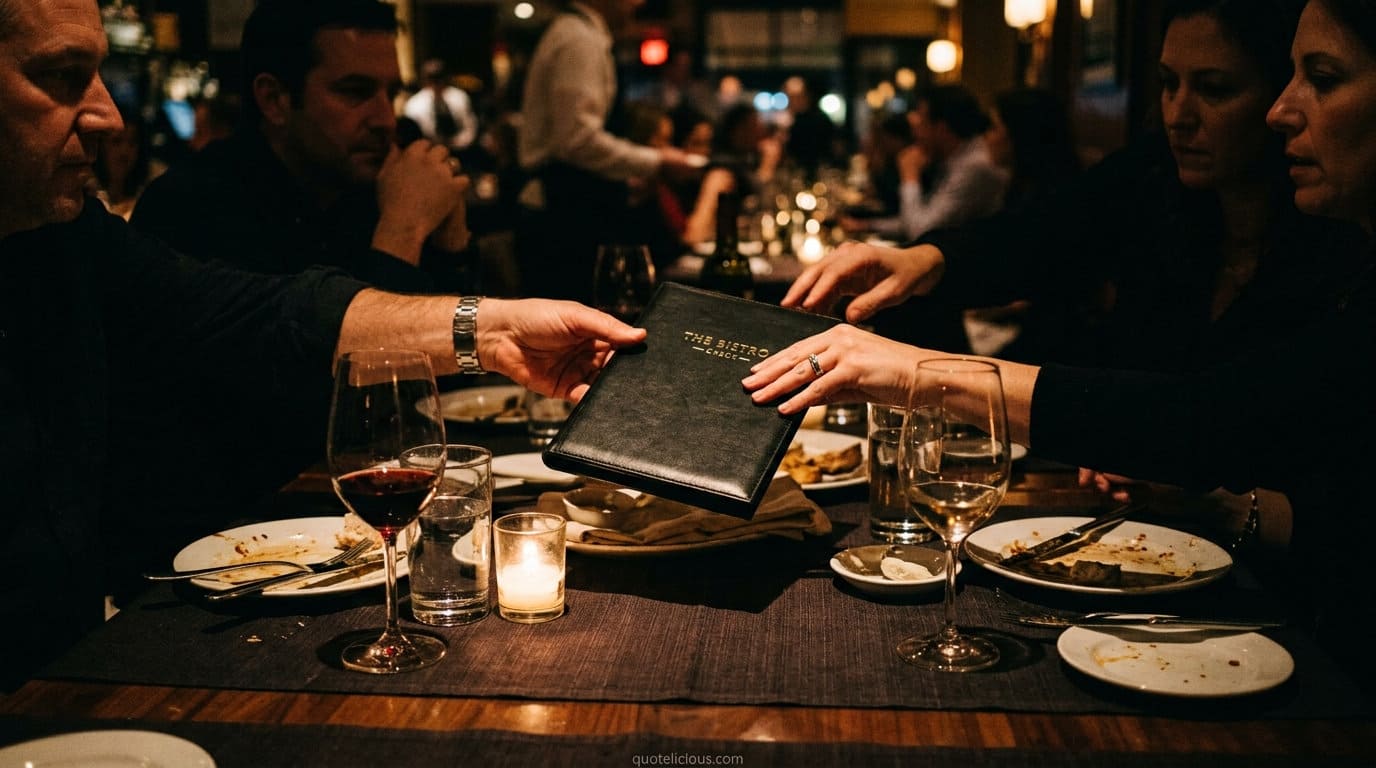
Someone at the table says “let’s just split it evenly” before the check even arrives. You already know your order was half the price of everyone else’s. Or your budget doesn’t have room for a quarter of a bill that includes three rounds of cocktails you didn’t touch.
You have about two seconds to decide. Stay quiet and eat the cost, or say something and risk being “that person” at dinner.
You don’t have to pick between those. Here’s exact wording for speaking up at the right moment, before the bill, during it, or after, so you pay what you actually owe without turning dinner into a math argument.
Why this is hard
Money talk at a shared table carries a social cost that’s separate from the financial one. Speaking up about a split can feel like you’re accusing the group of taking advantage of you, or like you’re being difficult over what looks like small money to everyone else.
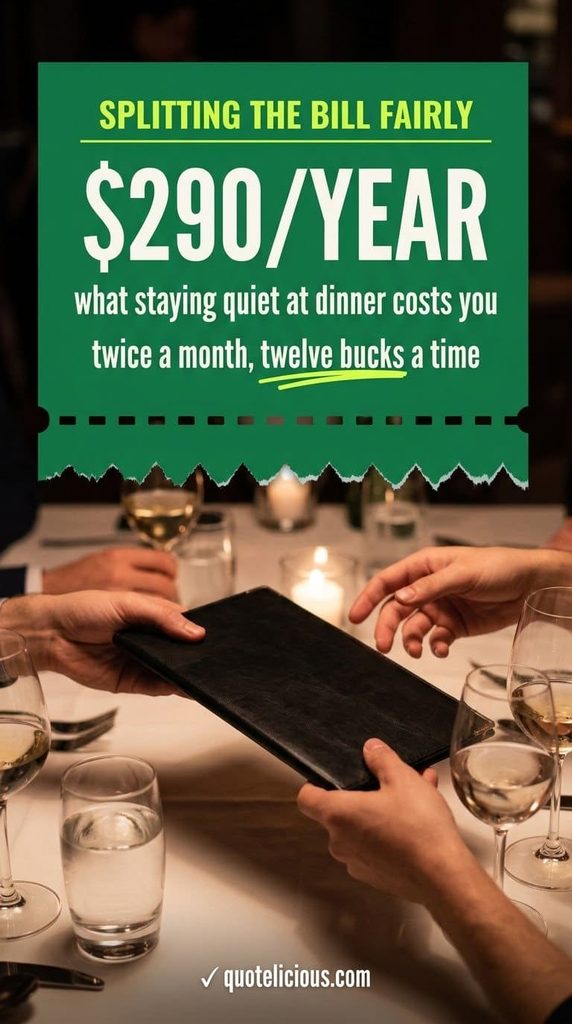
That gap between how small the dollar amount looks and how big the awkwardness feels is exactly why people stay quiet and overpay. And staying quiet is expensive. Twelve dollars a dinner, twice a month, is around $290 a year you never agreed to spend.



Timing matters more here than in almost any other money conversation. The same request lands completely differently before anyone’s ordered than it does with the bill already on the table and everyone reaching for their wallets.
Group size changes the awkwardness math too. With one other person, a lopsided split is easy to notice and easy to fix quietly.
In a bigger group, nobody can remember who ordered what by the time the check comes. Speaking up feels like holding up the whole table over a few dollars. But the person who overpays by staying quiet is you, every single time this comes up.

Tone table: what to say, by setting and timing
| Situation | Firm and direct | Warm but firm | Buy-time / deflect |
|---|---|---|---|
| Two people, before ordering | “Let’s just each pay for what we get tonight.” | “Would you mind if we split by what we actually order instead of evenly?” | “Let’s see what we each end up getting and figure it out from there.” |
| Two people, bill has arrived | “I only had the salad, so I’ll cover my part and you can cover yours.” | “Do you mind if we look at this by item instead of splitting it down the middle?” | “Let me take a second to figure out what my part comes to.” |
| Group dinner, before ordering | “I’m keeping my order light tonight, so let’s split by what we each get.” | “Would everyone be open to paying for their own thing instead of splitting the total?” | “Let’s decide how we’re splitting once we see what everyone’s ordering.” |
| Group dinner, bill has arrived | “I only had two items, so I’ll put in for those instead of an even share.” | “Since the orders were pretty different tonight, could we do this by what people actually had?” | “Give me a minute to add up what I owe before we split anything.” |
Read each line aloud before using it. If it sounds like something you’d say while reaching for your wallet, it’s ready.
Every warm-but-firm line above ends in a question. That’s deliberate. A question lets the group agree to a new default instead of reacting to a demand, and groups almost always say yes to a reasonable question.
Scripts by channel
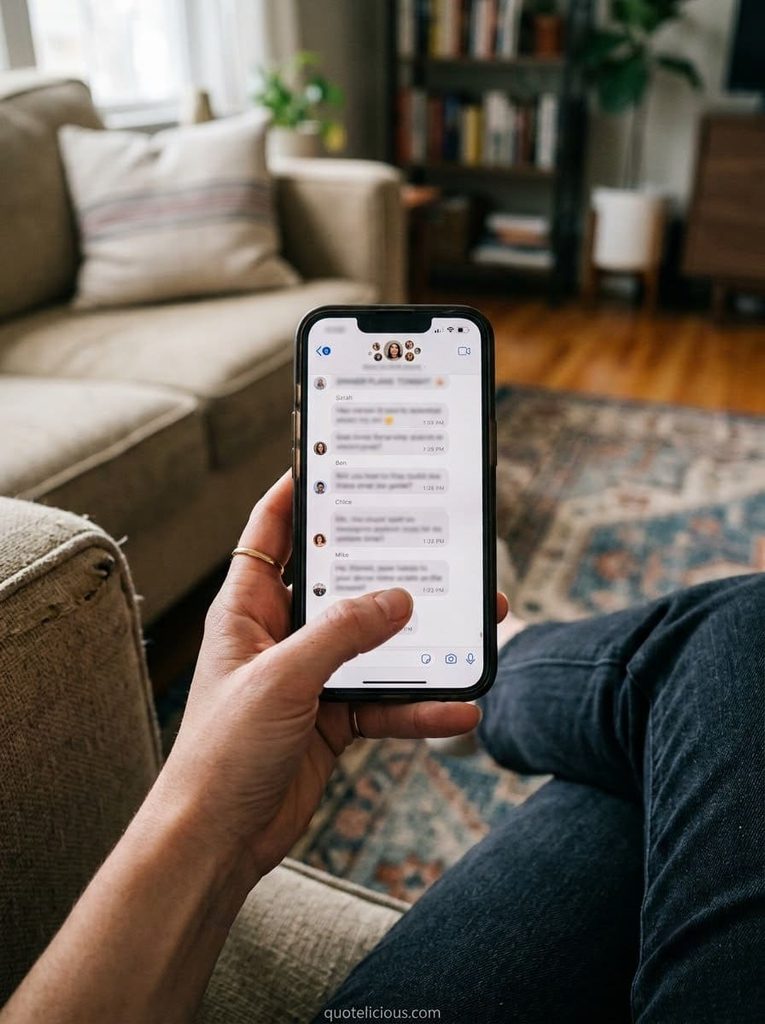
In the group chat before dinner
Raising it before you sit down avoids the table entirely. This is by far the easiest version of the conversation, and it’s the one to default to.
“Hey, excited for dinner tonight! Quick thing, I’m keeping my order pretty light since I’m watching spending this month, so would everyone be okay splitting based on what we each actually get instead of evenly? Happy to use an app to make it easy once we’re there.”
The “watching spending this month” clause does a lot of quiet work. It gives the group a reason that isn’t about them, which is why nobody argues with it.

Never Split the Difference, by Chris Voss sounds like overkill for a $400 dinner check, and then you read the chapter on calibrated questions and realize it's the exact tool. Voss's "how am I supposed to do that?" framing is why the warm-but-firm lines in the tone table above all end in questions. A question invites a solution, a statement invites an argument.
Shop NowThis post contains affiliate links. We may earn a commission on qualifying purchases at no extra cost to you.
At the table, in the moment
If it didn’t come up beforehand, this is how to raise it once the bill is down, without killing the mood.
“Before we split this, would it be okay if we went by what everyone actually ordered? I only had an appetizer and a drink, so I don’t think an even split makes sense for me tonight. I can add it up quickly on my phone if that helps.”
Offer to do the math yourself. The real objection to itemizing is never fairness, it’s the extra two minutes, and you can just remove that objection.
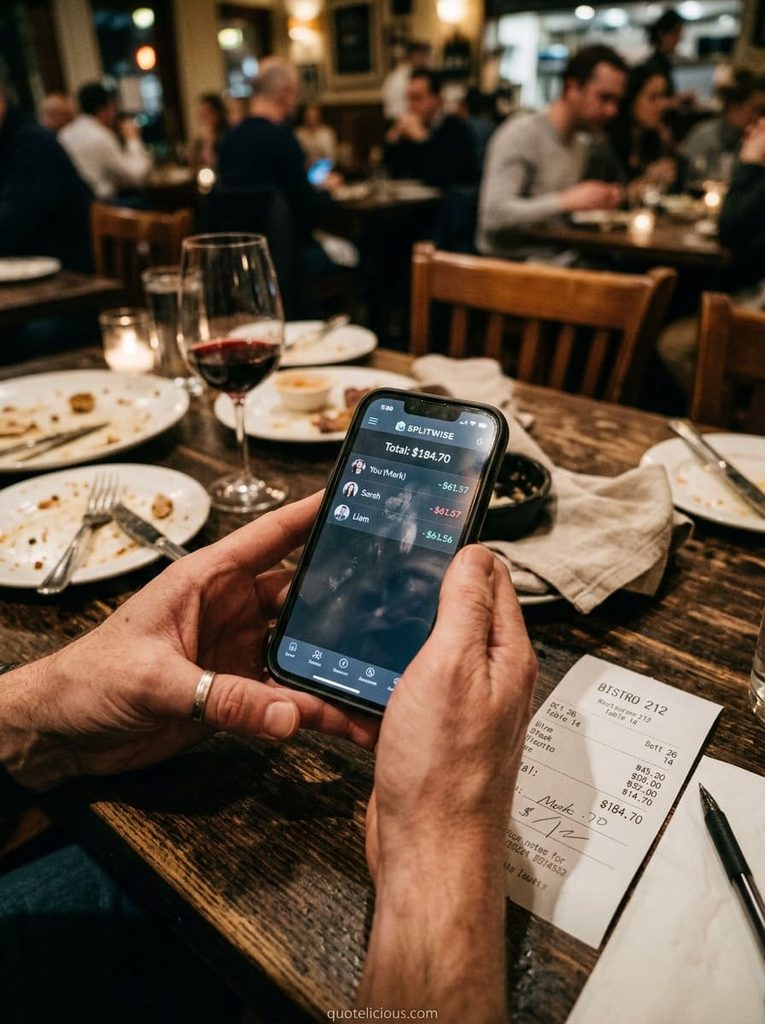
By text, settling up afterward
Useful when the bill got split evenly because nobody wanted to slow things down, and you’re following up privately.
“Hey, just wanted to follow up on dinner. I think I ended up covering more than my share since I only had the one entrée. Would you mind Venmo-ing me the difference, or we can just even it out next time? No rush, just wanted to flag it.”
Send this within a day. After that it reads as stewing, and the whole thing gets weirder than the amount deserves.
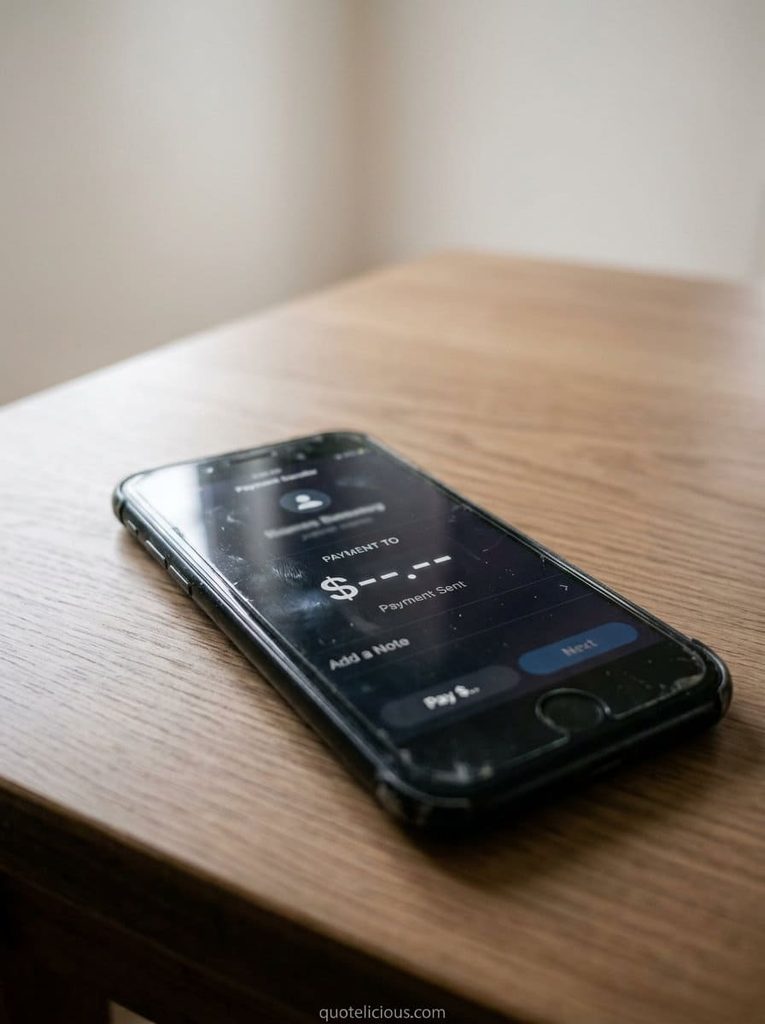
Handling rounding and tax fairly
Exact fairness down to the penny usually isn’t worth chasing, even with a splitting app. Tax, tip, and shared appetizers rarely divide evenly.
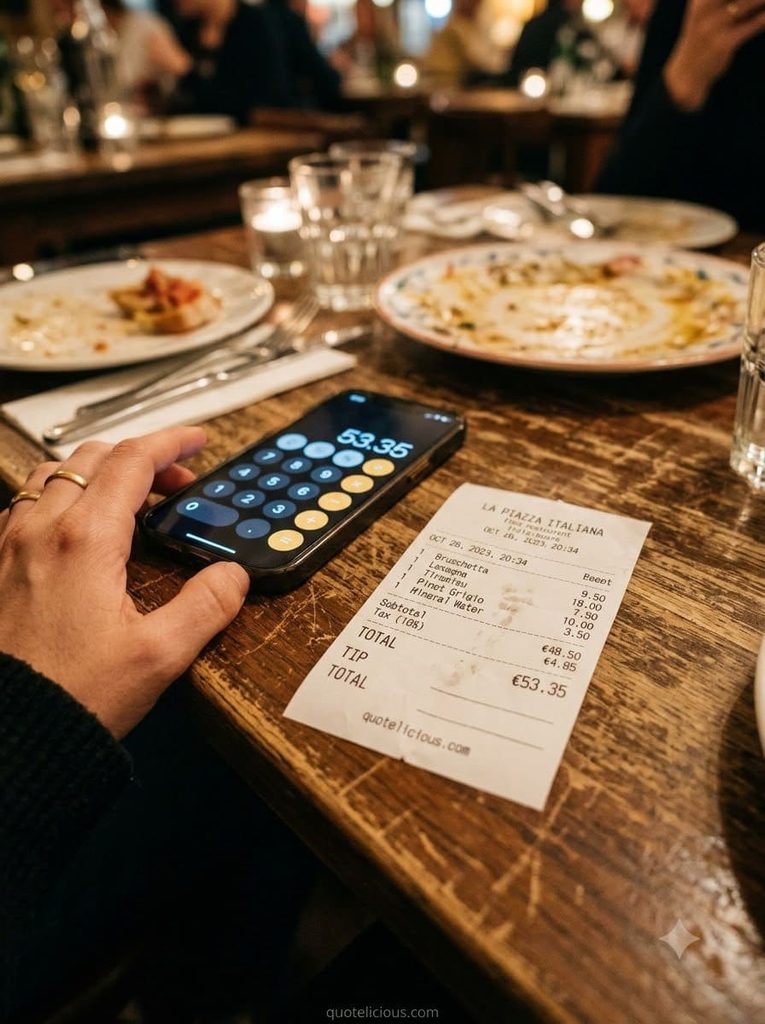
Here’s a method that takes under a minute. Split shared items evenly among everyone who had some, apply tax and tip proportionally to each person’s share of the food total, then round to the nearest dollar instead of the nearest cent.

Rounding up is the move if you want this to stay easy. Being the person who covers forty cents of slack buys you a lot of goodwill for the next time you ask.
Mini case study: Derek’s itemized ask
Derek, 34, was at a birthday dinner for eight where the bill came to just over $400. The host suggested splitting it evenly before anyone had really looked at the total.
Derek had ordered a single pasta dish and water. Several others had multiple drinks and appetizers.
Instead of staying quiet he pulled up a bill-splitting app and said, “Would anyone mind if we ran this through an app real quick instead of splitting it flat? I think it’ll actually be faster than doing the math by hand.”
Two people at the table visibly relaxed and thanked him, since they’d ordered less too. That part surprised him. He’d assumed he was the only one sitting on it.
One person made a comment about “keeping things simple” and seemed mildly annoyed at the extra step, even after the app showed she’d save a few dollars by itemizing.
The bill got split fairly. But that same friend suggested an even split again at the next group dinner, which is the real lesson here. Raising it once doesn’t change a group’s default habit.
By the third dinner Derek had started raising the itemized split in the group chat before anyone got to the restaurant. That one change, moving the ask earlier, cut the at-table friction almost entirely, even with the same friend.
He still eats a couple of dollars of rounding error rather than push for exact precision. He’s decided that’s a fine trade for keeping the process fast, and I’d agree with him.

What not to say
Don’t announce your exact order cost like an accusation. “You had three drinks and I only had water” puts people on the defensive instead of solving the math.
Don’t wait until everyone’s already paid. Once cash has changed hands you’re the person asking for money back, which is a much harder conversation than raising it beforehand.
Don’t assume the app does the social work for you. It helps with the math, but silently pulling out your phone looks passive-aggressive if you don’t say why.
Don’t over-apologize for asking. One “hope this is okay” is plenty. Repeating it makes the request feel bigger than it is.
Don’t stay silent and then complain later to someone who wasn’t there. If the group needs to hear it, say it to the group.
Making it a habit, not a one-time ask
If bill-splitting tension keeps coming up with the same friends, raise it once outside of any specific dinner. Frame it as a general preference, not a complaint about one meal.
Agreeing that the group defaults to itemized splitting unless someone says otherwise removes the need to renegotiate every time you eat out. It also lands better proposed on a calm afternoon than in the middle of settling a check.

FAQ
Is it rude to ask for separate checks at a restaurant?
No. Many restaurants can split a check by item if you ask before ordering or right when the server takes the table’s order, and doing so avoids the awkward math entirely once the meal is over.
What if I’m the only one who wants to split by item?
You can ask to pay separately for just your own portion without requiring everyone else to itemize theirs. You’re not obligated to match the group’s method if it doesn’t work for your budget.
How do I bring this up without seeming cheap?
Frame it around what you ordered rather than what others spent. “I kept it light tonight, so I’ll just cover my part” reads as budget-conscious, not stingy.
What if the group always defaults to splitting evenly anyway?
Raise it early and specifically each time instead of assuming last time’s conversation carries forward. Habits are sticky, and a one-time mention usually needs repeating before it becomes the new default.
Is it okay to use a splitting app even if others find it awkward?
Yes. Offer it as a convenience rather than a confrontation, and most groups adjust once they see it actually speeds up settling the bill.
What if I’m hosting and don’t want guests to feel they should pay?
Say so explicitly before the meal starts. “Dinner’s on me, no need to worry about splitting anything” removes any ambiguity and stops guests from awkwardly trying to itemize a bill you never meant them to share.

Recommended reads
Three books on asking for what you want without making it a fight. Price and rating change often, so reconfirm both on Amazon before you buy.
Never Split the Difference, by Chris Voss sounds like overkill for a $400 dinner check, and then you read the chapter on calibrated questions and realize it’s the exact tool. Voss’s “how am I supposed to do that?” framing is why the warm-but-firm lines in the tone table above all end in questions. A question invites a solution, a statement invites an argument.
Getting to Yes, by Roger Fisher and William Ury is the source of separating the people from the problem, which is the whole skill in a bill split. The math is the problem. Your friend who ordered three cocktails is not. Confuse those two and dinner goes sideways.
Nonviolent Communication, by Marshall Rosenberg gives you the observation-and-request structure that keeps “I only had the salad” from sounding like a complaint. It’s a slower read than the other two and the examples can feel earnest. But the core move, stating what you noticed and what you’d like without adding a judgment, is precisely what makes these scripts work.
Related:
- Money Talk & Scripts: Pillar Guide
- What to Say When a Friend Asks to Borrow Money
- How to Politely Decline a Wedding You Can’t Afford
- How to Say No When In-Laws Ask You to Pay for Their Trip
- How to Respond When Family Guilt-Trips You About Inheritance or Money
- How to Respond When Your Parents Keep Asking You for Money
Want these scripts saved on your phone for the next dinner? Download the free In-Law Money Boundary Script Pack (PDF), which covers bill splitting, family requests, and loan asks. No email required, no signup, just the file.
Products We Recommend
This post contains affiliate links. We may earn a commission on qualifying purchases at no extra cost to you.
Never Split the Difference, by Chris Voss
Never Split the Difference, by Chris Voss sounds like overkill for a $400 dinner check, and then you read the chapter on calibrated questions and realize it's the exact tool. Voss's "how am I supposed to do that?" framing is why the warm-but-firm lines in the tone table above all end in questions. A question invites a solution, a statement invites an argument.
Shop Now
Getting to Yes, by Roger Fisher and William Ury
Getting to Yes, by Roger Fisher and William Ury is the source of separating the people from the problem, which is the whole skill in a bill split. The math is the problem. Your friend who ordered three cocktails is not. Confuse those two and dinner goes sideways.
Shop now
Nonviolent Communication, by Marshall Rosenberg
Nonviolent Communication, by Marshall Rosenberg gives you the observation-and-request structure that keeps "I only had the salad" from sounding like a complaint. It's a slower read than the other two and the examples can feel earnest. But the core move, stating what you noticed and what you'd like without adding a judgment, is precisely what makes these scripts work.
Shop nowNever miss an update — choose Quotelicious as your preferred source on Google.
How it works: Tap the button below to open Google's settings page, then check the box next to Quotelicious.
Tap the checkbox to turn it blue — that's how you know it's set.